

The Invisible Crack: What Every Solar EPC Company in India Should (But Doesn't) Tell You About Overtorquing
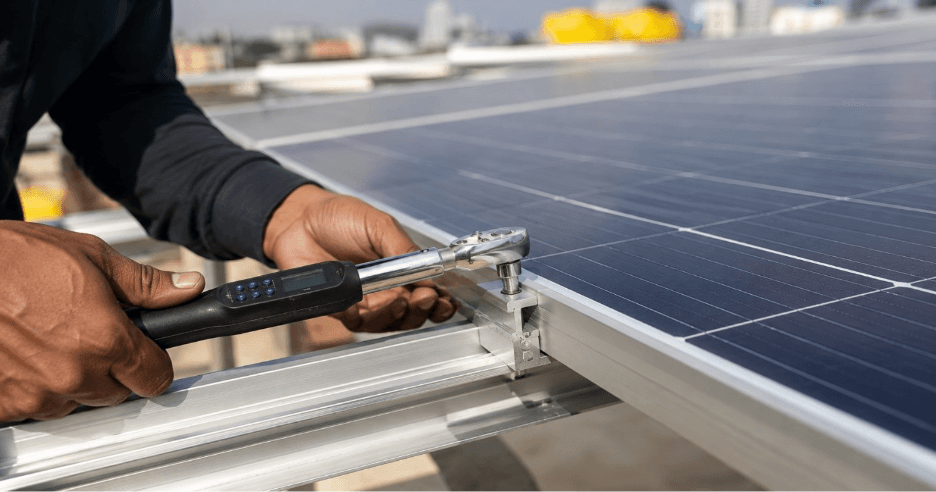
A solar EPC company in India installs, wires, and commissions rooftop solar systems from design through grid connection. It helps homeowners cut electricity costs under schemes like PM Surya Ghar: Muft Bijli Yojana. In India's mixed climate, reliable EPC work depends on one overlooked step: correct bolt torque. Choosing the right partner protects your 25-year investment.
India is in the middle of a residential rooftop solar installation boom. Under the Pradhan Mantri Surya Ghar: Muft Bijli Yojana — a scheme targeting 10 million solarised households — over 4 million Indian homes had rooftop solar installed as of mid-2026.
Beneath that growth sits a technical problem most buyers never hear about: overtorquing — tightening structural bolts and module clamps past their engineered limit. It quietly shortens the working life of rooftop solar installation systems that are supposed to run for 25 years.
What Does a Solar EPC Company in India Actually Install?
A residential EPC scope covers three things: solar mounting structure installation — the Module Mounting Structure (MMS) that holds panels to the roof — the electrical wiring and inverter, and the net-metering connection to the DISCOM. Torque only affects the first of these — but it is the one most EPCs treat as unskilled labor rather than an engineering step.
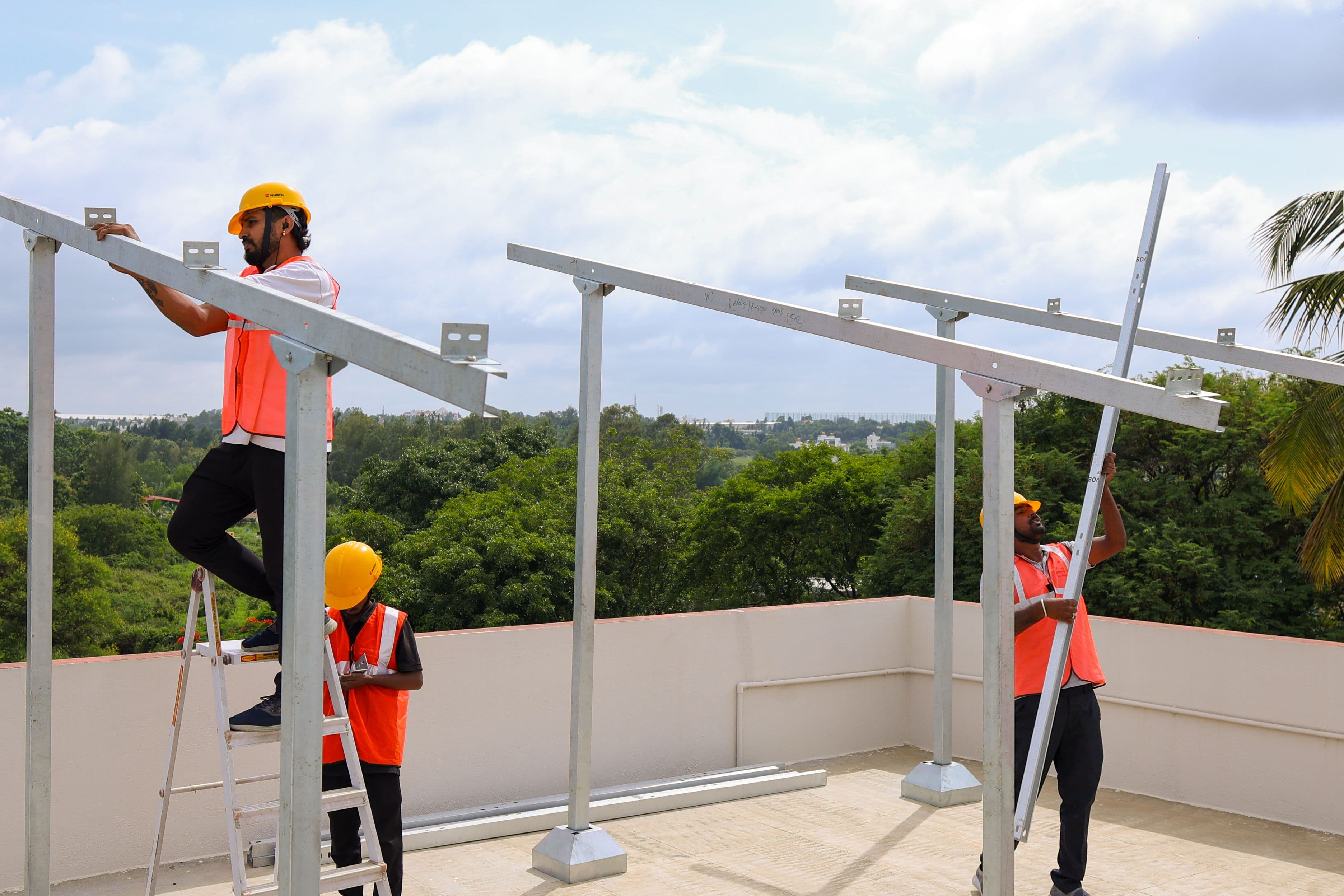
In a typical installation, a technician secures panels to the MMS using mid-clamps and end-clamps. Atria's own published walkthrough of the process names this step directly: a site engineer first confirms the roof "can safely bear the weight of the panels," then the mounting structure goes up alongside the inverter and cabling in a single visit. What that walkthrough doesn't cover — and this post does — is the one variable that determines whether that structure holds for 25 years: how tightly it was bolted down. Because Indian roofs face everything from coastal cyclones in Odisha to 150 km/h wind gusts on the northern plains, installers often default to a flawed rule of thumb: the tighter the bolt, the safer the panel.
The Anatomy of the Blunder: Force vs. Physics
That mentality fails in two directions at once when a worker uses an impact driver or an uncalibrated spanner with no preset limit.
Micro-cracks and cell degradation
Standard module frames are extruded aluminium housing tempered glass and silicon wafers. Overtorquing a mid-clamp pinches the frame with concentrated, localised pressure, causing micro-cracks in the silicon cells beneath — invisible from the roofline, but permanent.
Fastener fatigue
Structural fasteners are governed by IS 800:2007 (General Construction in Steel), which specifies a preload tension per bolt grade. Overtorquing pushes SS-304 stainless or HDG Grade 8.8 bolts past their elastic limit into permanent plastic deformation — the bolt stretches, the threads strip, and the joint becomes brittle.
The Data: The Real Cost of a Loose Turn
EPCs often blame "poor panel quality" or "grid fluctuations" for underperformance. Plant-health audit data — and Atria's own reporting on why rooftop solar systems lose power — tells a different story:
- The generation leak — micro-cracks from improper clamping force trigger localised hot spots. Over 2–3 years, these isolate parts of a solar string, producing a permanent 8–15% drop in annual energy yield. On a commercial 100 kWp rooftop, that is a loss of up to ₹70,000 a year.
- The cyclone vulnerability — in post-cyclone failure reviews, most structural blow-offs did not happen because wind exceeded the IS 875 Part 3 design threshold. They happened because overtorqued, fatigued fasteners sheared at the joint under wind vibration, triggering a domino failure across the array.
- Warranty voidance — Tier-1 module manufacturers specify clamps be torqued to 14–20 Nm (see the warranty terms that depend on it). Overtorquing voids the 25-year linear performance warranty outright, and electroluminescence (EL) testing easily reveals clamp-induced micro-cracking — leaving the owner with no insurance recourse.
Further reading on fastener torque as an installation-quality issue: Solar Power World — "Accurate torque values mean less time spent on O&M later"; PVRack — Solar Fastener Torque Specifications Guide.
Why Solar EPC Companies in India Skip Torque Calibration
The surge under Surya Ghar has exposed a skilled-labor shortage. Of the thousands of local sub-contractors working across Tier-2 and Tier-3 cities, only a minority use calibrated torque wrenches.
The default tool is often an uncalibrated T-spanner or an aggressive pneumatic impact gun. State DISCOM technical specifications mandate material thickness — minimum 2.5mm GI channel, SS-304 hardware — but rarely audit the actual installation torque during commissioning. That gap is exactly why choosing the right rooftop solar installation company matters more than comparing installed capacity — the most common rooftop solar installation mistakes happen at the fastener, not the spec sheet.
Five Things Worth Checking Before You Sign
This is the rooftop solar installation checklist a homeowner or facilities manager can hand to any EPC before signing off on installation:
1. Specify torque per fastener type up front
14–20 Nm for module mid/end clamps, 40–55 Nm for purlin-to-rafter joints, 70–90 Nm for foundation anchor bolts — in writing, before work begins.
2. Require a calibrated solar panel torque wrench on site
Not an impact driver, not an uncalibrated spanner. Ask to see the wrench's last calibration date.
3. Log every joint on a signed torque-log sheet
This should be part of the EPC's Field Quality Plan (FQP) and handed over at commissioning, not just at handover of the invoice.
4. Run post-installation EL imaging on a module sample
Electroluminescence testing reveals star-shaped micro-cracks at the clamping zones before they become a generation problem.
5. Get DISCOM/PMC sign-off with the torque log attached
Commissioning approval should reference the same document — not a separate checkbox exercise.
A quick verification checklist: if an EPC can't show you a calibrated wrench, a torque-log sheet, or an EL-testing option when asked, that's the moment to ask why — not after the panels are on the roof.
Torque Specification Comparison Table
The specification a compliant Indian rooftop installation should follow, by fastener location:
What Separates a Reliable Solar EPC Company in India from the Rest
Most "top EPC" comparisons rank companies by installed MW capacity or price per watt. Neither tells you whether the crew doing your rooftop solar installation used a calibrated tool. Before signing, ask any solar installer in Bengaluru to confirm, in writing:
- They use calibrated digital torque wrenches, not impact drivers, on structural fasteners.
- They provide a signed torque-log sheet as part of the handover documentation.
- They offer (or will arrange) EL testing on a sample of installed modules.
- Their installation manual references IS 800:2007 and IS 875 Part 3 explicitly.
Their warranty documentation states the torque range that keeps the manufacturer's warranty intact.
Where Atria Fits Into This
Atria operates as a solar EPC across residential and commercial rooftop projects, and separately covers its net-metering process in Bengaluru on the blog. Two verified points are directly relevant to the standard this post describes: its Why Atria comparison table lists an "IIT-certified structure" against a market norm it describes as "often uncertified," and its warranty page states that its workmanship warranty covers "any defect arising purely from our installation process" at no extra cost. Neither page names torque calibration specifically, so treat those two claims — not a torque-specific promise — as what's actually confirmed.
What to Do Next
If you're evaluating a solar EPC company in India for a rooftop installation, the fastest way to apply this checklist is to request a savings estimate and site visit and ask the crew directly about torque calibration, or start an order once you're satisfied with the answers. You can also call Atria directly at +91-9901100428 or email welcome@atriarenewable.com (registered office: 11, Commissariat Rd, Ashok Nagar, Bengaluru, Karnataka 560025).
A rooftop solar plant is a 25-year financial instrument, not a short construction project. An extra half-turn on a bolt might feel insignificant to a technician working a rooftop in 42°C heat — but it directly compromises the investment underneath it. As India races toward its rooftop solar targets, the real differentiator between a good and a bad solar EPC company in India won't be price per watt. It will be whether they can show you a signed torque log.
References
- Solar Power World — "Accurate torque values mean less time spent on O&M later" — https://www.solarpowerworldonline.com/2025/05/accurate-torque-values-mean-less-time-spent-on-om-later/
- PVRack — Solar Fastener Torque Specifications Guide — https://pvrack.com/installation-guide/fastener-torque-specs/
- Home Solar Installation in Bengaluru: The Real Process — https://www.atriarenewable.com/blog/home-solar-installation-bengaluru-process
- Why Is Your Rooftop Solar System Losing Power — https://www.atriarenewable.com/blog/why-is-your-rooftop-solar-system-losing-power
- How to Choose the Right Solar Installer in Bengaluru — https://www.atriarenewable.com/blog/how-to-choose-the-right-solar-installer-in-bengaluru
- Top 5 Warranties to Look for When Picking Panels for Your Roof — https://www.atriarenewable.com/blog/top-5-warranties-to-look-for-when-picking-panels-for-your-roof-or-solar-panel-battery-and
- Net Metering in Bangalore: What BESCOM Allows in 2026 — https://www.atriarenewable.com/blog/net-metering-in-bangalore-what-bescom-allows-in-2026-and-what-most-epcs-don-t-explain
- PM Surya Ghar Yojana — https://www.atriarenewable.com/pm-surya-ghar-yojana/
- Why Atria — https://www.atriarenewable.com/why-atria/
- Atria Commercial Projects — https://www.atriarenewable.com/atria-commercial-projects/
- atriarenewable.com/sitemap.xml — https://www.atriarenewable.com/sitemap.xml
Keep Reading
Related articles.
 Journal
Home Solar Installation in Bangalore: How the Process Actually Works
Table of Contents Highlights of This Article Introduction Who This Guide Is For What Does Home Solar Installation Actually Involve? The 5 Steps of Home Solar Installation in Bangalore So How Long Does Home Solar Installation Actually Take? The Bottom Line Frequently Asked Questions References
 Journal
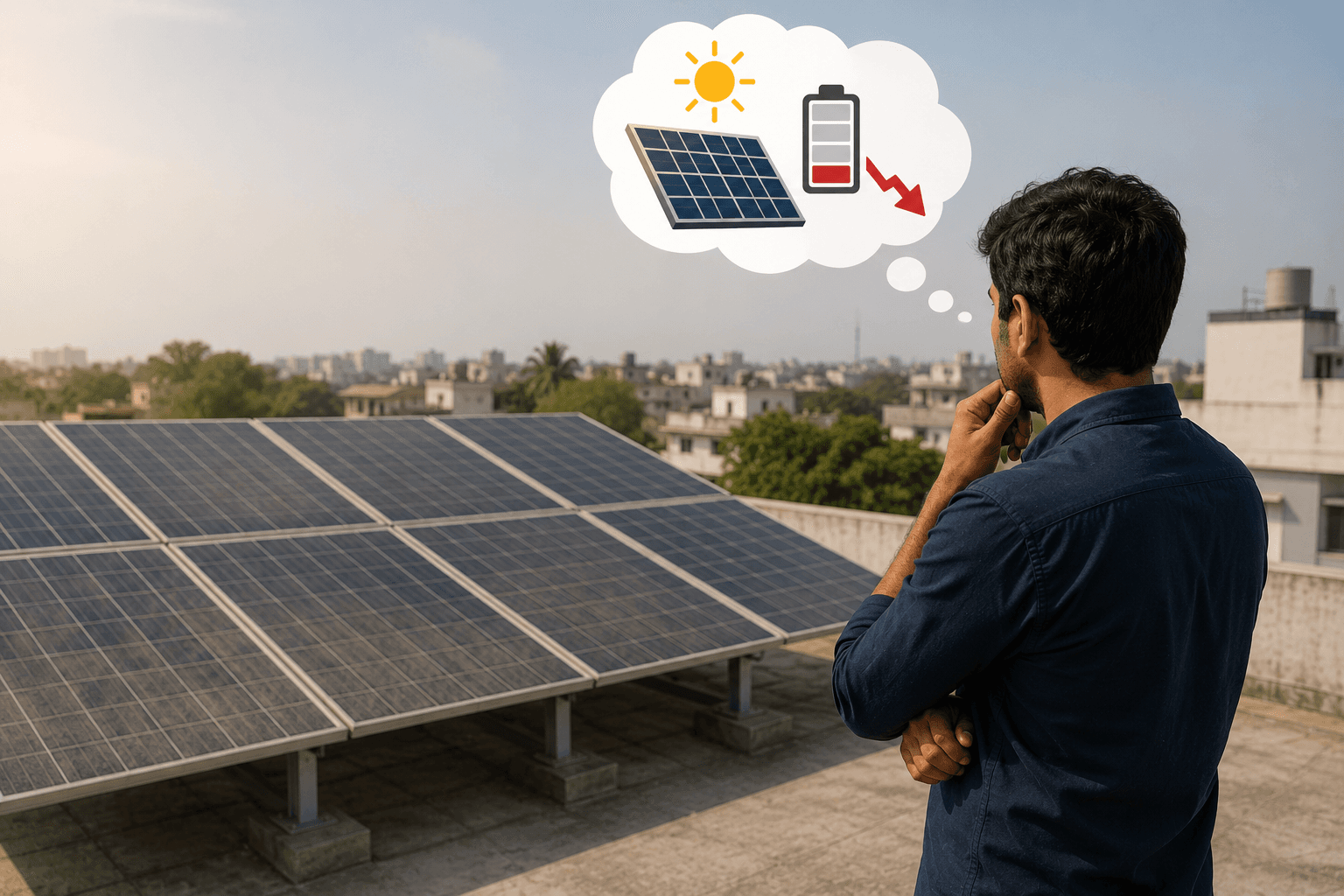
Why Is Your Rooftop Solar System Losing Power?
7 Common Causes of Generation Loss How to predict and prevent them from happening Factors that cause the generation loss
 Journal
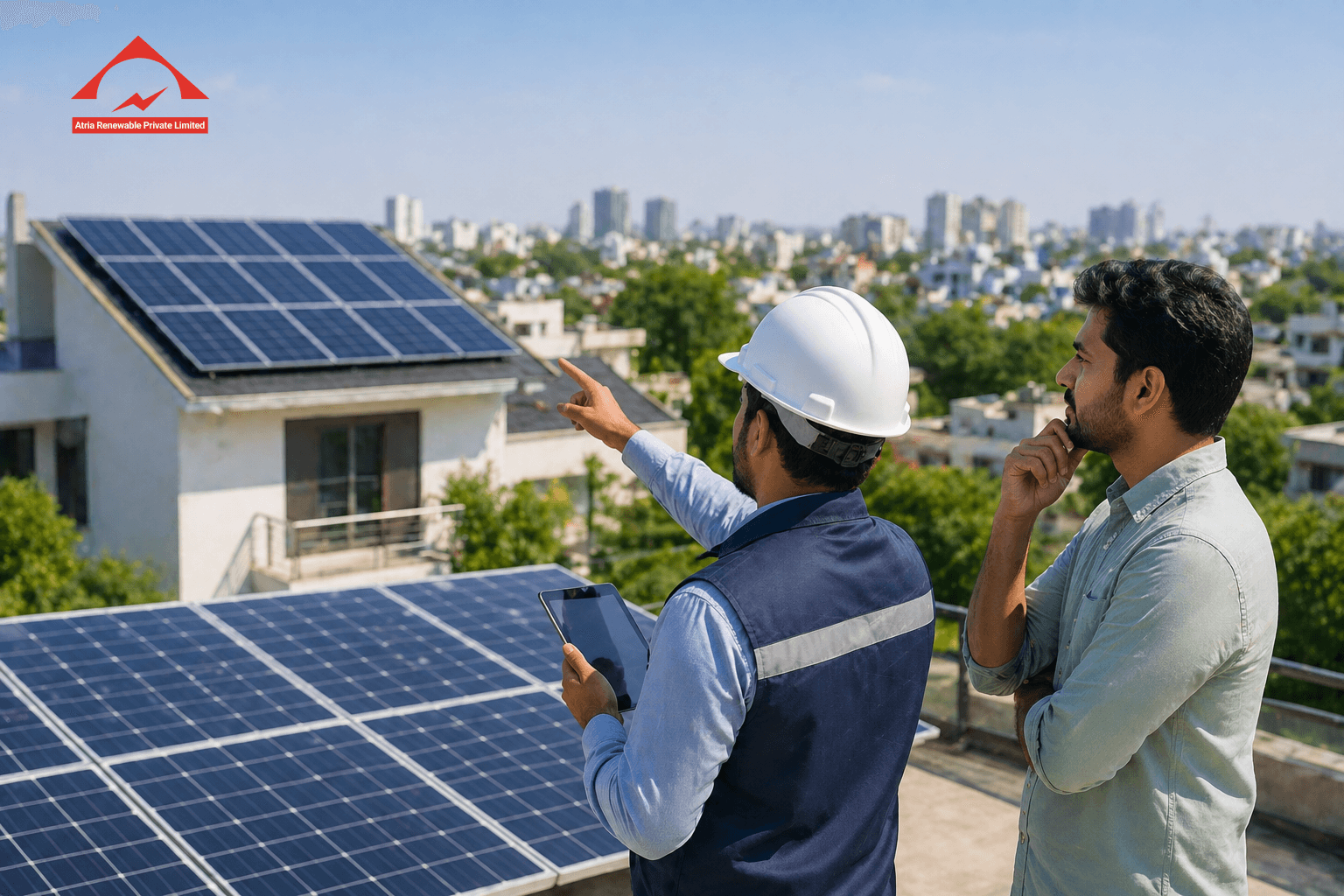
How to choose the best Solar Installer in Bengaluru?
Choosing the right solar installer is as important as the technology, as it directly impacts efficiency, safety, and long-term savings. Focus on value over cost—cheaper installations can lead to poor quality, lower performance, and higher maintenance in the long run. Select an installer with local expertise in Bengaluru, ensuring proper design, compliance with BESCOM regulations, and efficient execution. Evaluate technology, quality, and end-to-end services, including panels, inverters, warranties, approvals, installation, and ongoing support. Prioritize after-sales service, transparency, and proven track record to ensure long-term reliability, better ROI, and a hassle-free experience.

Still have a question we didn't answer?
Book a free site assessment — our engineers answer in person, on your roof.
Request a Call