Why Is Your Rooftop Solar System Losing Power?
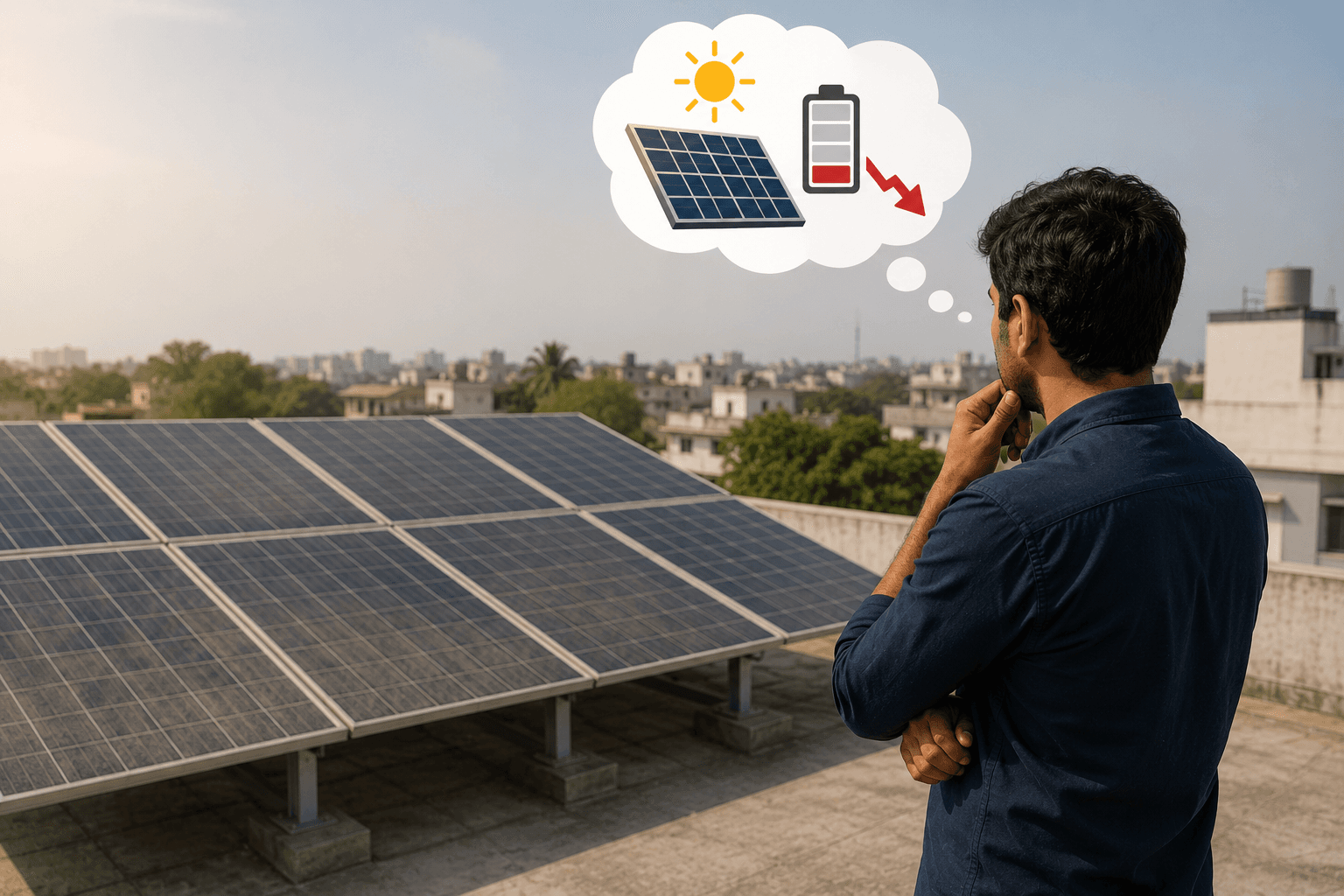
Installing a rooftop solar system has become the best and smartest way to fight the raising electricity bills and polluted conventional electricity. However, like any long-term asset, solar panels are exposed to environmental conditions and external factors that can affect their performance over time.
Many solar system owners assume that if the panels are physically present on the roof, they are generating power at their full potential. In reality, certain types of damage can significantly reduce energy generation, often without obvious signs. For homeowners and businesses in Bengaluru, understanding these potential issues can help maximize solar output and extend the life of the system. Let us explore the most common and possible reasons why the rooftop solar encounters generation loss?
1. Dust and Dirt Accumulation
Bengaluru experiences long dry periods, ongoing construction activity, and increasing traffic pollution. As a result, dust accumulated on the surface of the solar panels is one of the most common reasons for the generation loss in rooftop home solar.
When dust settles on the panel surface, it blocks sunlight from reaching the solar cells. Even a thin layer of dirt can lower efficiency, while heavy accumulation can result in significant power losses and can lead to further damage the panel.
Common causes include:
- Road dust
- Construction debris
- Industrial pollution
- Bird droppings
Regular cleaning and maintenance can help restore optimal performance and prevent avoidable energy losses. With Atria’s cleaning plans, you can be stress-free about the maintenance and cleaning for your rooftop solar panels in Bengaluru.
2. Microcracks in Solar Cells
Microcracks are tiny fractures within the solar cells that are often invisible to the naked eye. These cracks can develop during transportation, installation, or due to long-term mechanical stress or even could be a manufacturing defect.
Although the panel may appear normal from the outside, damaged cells generate less electricity. Over time, these cracks can expand and affect larger portions of the panel eventually leading to significant loss of energy generation.
Possible causes include:
- Improper handling during installation
- Heavy objects falling on panels
- Structural movement of rooftops
- Thermal expansion and contraction
Periodic inspections can help identify performance drops associated with cell damage before they become severe. Atria provides you with the rooftop solar along with “0 Microcrack certification”. This means all the panels that are used are handpicked by our experts and comes crack free and with full potential.
3. Hotspots on Solar Panels
A hotspot occurs when a section of a solar panel becomes significantly hotter than the surrounding areas. This usually happens when one or more cells are shaded, damaged, or malfunctioning. Hotspots not only reduce energy production but can also accelerate panel degradation if left unaddressed.
Common causes include:
- Partial shading from trees or nearby structures
- Bird droppings
- Defective cells
- Faulty electrical connections
Thermal imaging inspections are always used by our team to detect hotspots that are otherwise difficult to identify.
4. Delamination
Solar panels are built using multiple layers—including tempered glass, encapsulant, solar cells, and a protective backsheet or rear glass—that are permanently bonded together to withstand decades of outdoor exposure. Over time, however, continuous exposure to heat, moisture, UV radiation, and environmental stress can weaken these bonds, causing the layers to separate. This condition is known as delamination.
Once delamination begins, small gaps form between the layers, allowing moisture and air to penetrate the panel. This can reduce light transmission to the solar cells, accelerate corrosion of internal components, create hotspots, and gradually decrease the panel's energy output. If left unchecked, severe delamination can also shorten the overall lifespan of the solar panel.
Common signs of delamination include:
- Bubbling or blistering beneath the front glass
- Yellowing or discoloration of the panel
- Visible separation between the glass, encapsulant, or backsheet
- Cloudy patches or uneven appearance on the panel surface
In Bengaluru, solar panels experience a combination of high summer temperatures, strong UV exposure, and heavy monsoon rains. These repeated cycles of heating, cooling, and moisture can place additional stress on the panel's laminated layers over the years. While high-quality modules are designed and tested to withstand these conditions, lower-quality panels or those manufactured with inferior encapsulation materials are more susceptible to delamination, making it essential to choose certified, reliable solar modules for long-term performance.
5. Glass Cracks and Surface Damage
The tempered glass on solar panels is designed to withstand harsh weather conditions. However, impact damage can still occur.
Cracks in the glass may result from:
- Falling branches
- Severe storms
- Accidental impact during rooftop work
- Heavy objects striking the panel
- Hailstorms
Even small cracks can allow moisture to enter the panel, potentially causing electrical faults and reduced power generation over time. Any visible crack should be inspected immediately to prevent further deterioration.
6. Shading Issues
Many solar systems perform well initially but begin experiencing generation losses as surrounding conditions change. New buildings, growing trees, water tanks, antenna structures, or rooftop additions can create partial shading on panels. Even a small shaded area can impact the output of an entire string of solar panels.
Common sources of shading include:
- Tree growth
- Neighboring buildings
- Rooftop equipment
- Utility poles and cables
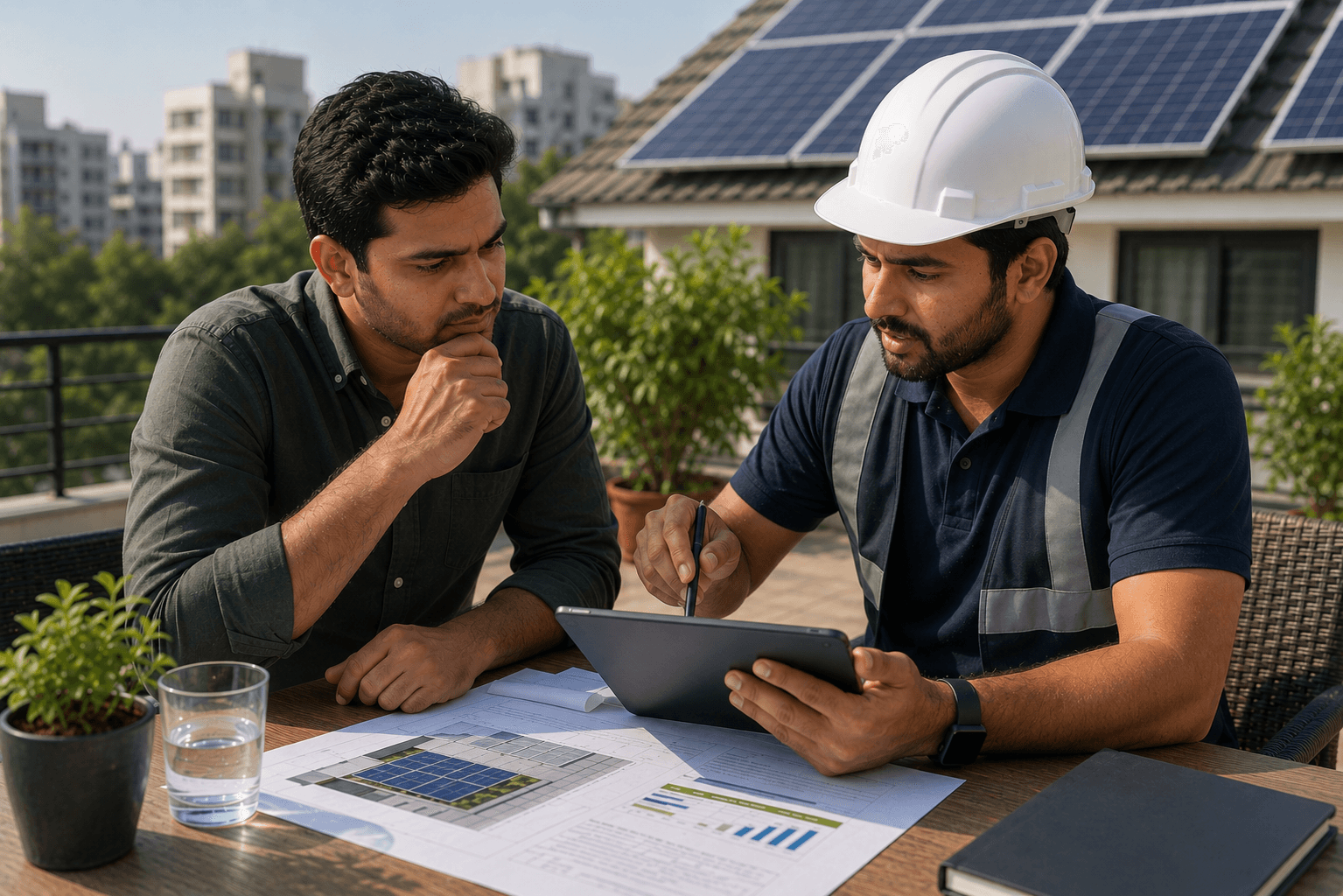
A professional site survey can help identify shading risks and recommend corrective measures. Book you survey now with Atria Renewable, to get the best survey and rooftop solar solutions.
7. PID (Potential Induced Degradation)
Potential Induced Degradation (PID) is a phenomenon in which high voltage differences between the solar cells and the grounded frame cause electrical leakage within the panel. Over time, this leakage affects the cells' ability to generate electricity efficiently, resulting in a gradual decline in overall performance.
PID usually develops over several years and is often difficult to detect without regular performance monitoring, as the loss in efficiency happens gradually rather than suddenly. It is more likely to occur in large solar installations operating at high system voltages, especially in hot and humid environments.
Common effects of PID include:
- Lower power output
- Reduced overall energy yield
- Uneven performance across solar panels
- Faster long-term degradation if left unaddressed
Modern, high-quality solar panels are designed with PID-resistant cell technology and advanced encapsulation materials to minimize this risk. In addition, proper system design, correct grounding practices, and installation by experienced professionals can significantly reduce the chances of PID, ensuring consistent energy generation and long-term system reliability.
Protecting Your Solar Investment
Most solar panel damages develop gradually and often go unnoticed until a significant drop in generation occurs. The good news is that many of these issues can be prevented or detected early through routine inspections and professional maintenance.
For solar system owners in Bengaluru, periodic cleaning, performance monitoring, thermal inspections, and preventive maintenance can help ensure the system continues generating maximum energy throughout its lifespan. With Atria's “Namma Atria” app, you can bring the risk of undetected solar panel issues close to zero. The app provides a comprehensive dashboard that lets you monitor your system's live performance while also tracking its energy generation over time. By comparing historical and real-time data, you can quickly identify any unexpected drop in performance and take timely action before minor issues become major problems.
A well-maintained rooftop solar system not only delivers better savings but also protects the long-term return on your investment. By identifying potential damages early, homeowners and businesses can keep their rooftop solar systems operating efficiently for decades.
Keep Reading
Related articles.
 Tips
Tips7 Things That Might Become Red Flags In Your Solar Journey
7 critical factors that can become costly red flags if overlooked during your solar journey. False promises by the installers, no proper warranty checks or site assessments, and lack of equipment knowledge. What to ask and what to know?
 Tips
TipsIs Your Home Ready for Rooftop Solar?
A Complete Checklist for Homeowners in Bengaluru Find the checklist to install rooftop solar in Bengaluru. Mandatory permissions and prerequisites.
 Tips
TipsDoes Rain Help or Hurt the Solar Panels?
Effects of rain on rooftop solar panels. Cooler rainy weather can improve panel efficiency. Heavy clouds reduce sunlight and lower power generation. Rain cannot remove stubborn dirt and residue completely. Proper maintenance helps rooftop solar perform well during monsoons in Bangalore.

Still have a question we didn't answer?
Book a free site assessment — our engineers answer in person, on your roof.
Request a Call