

Is Your Home Ready for Rooftop Solar?
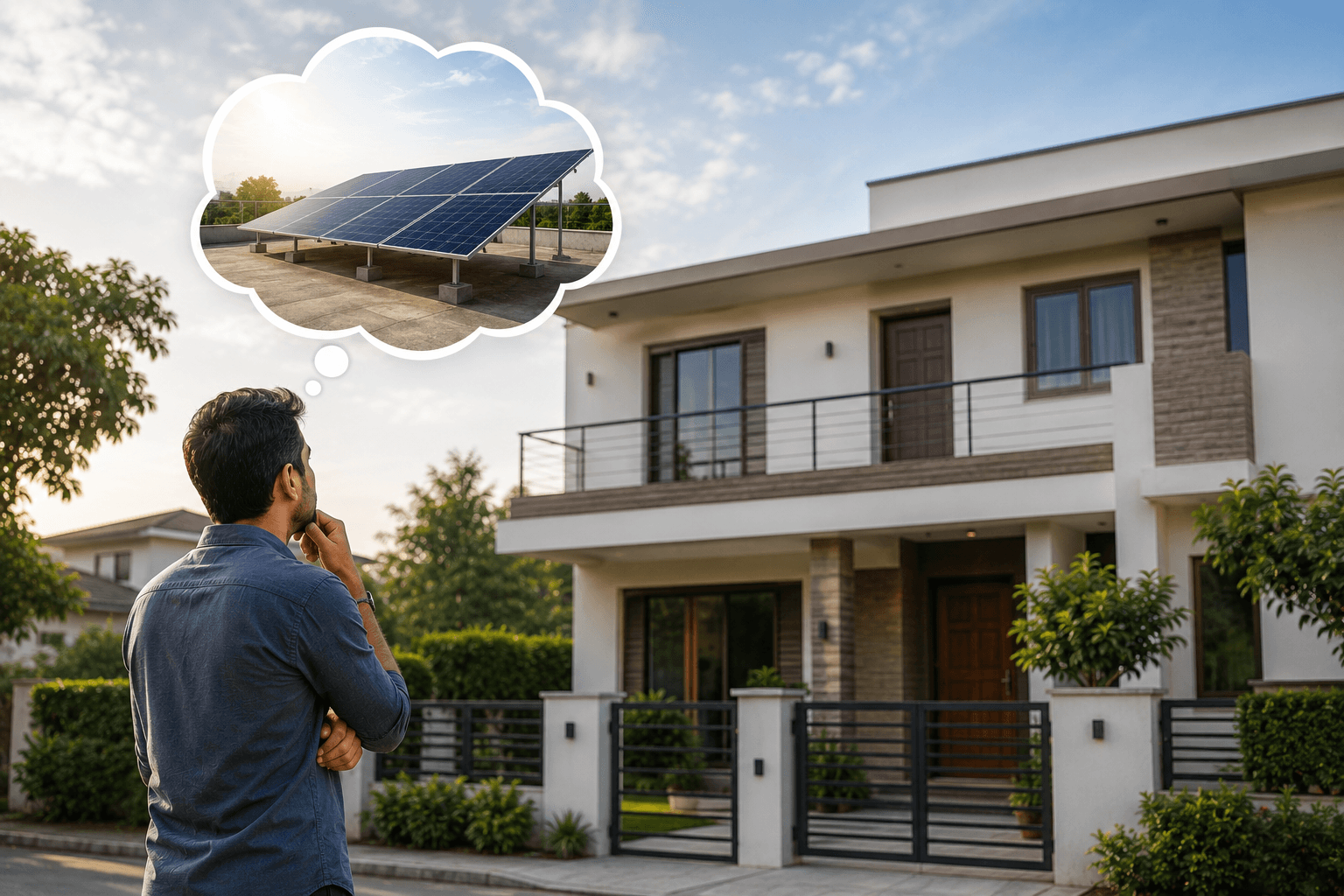
The rooftop solar revolution is sweeping across Bengaluru. With rising electricity bills, a sun-drenched climate, and attractive government subsidies, more and more homeowners are making the switch. But before you call up an installer, there is one important question you need to answer: Is your home actually ready for rooftop solar?
Most conversations about solar energy focus on the benefits — lower bills, greener living, and long-term savings. What rarely gets discussed is the checklist of prerequisites your home must meet before installation can even begin. At Atria Renewable, we believe an informed homeowner is an empowered homeowner. So let's walk through every box you need to tick.
1. Your Home Must Have a Valid BESCOM Electricity Connection
This is the very first requirement. To install a grid-tied rooftop solar system in Bengaluru, your home must have an active electricity connection with BESCOM (Bangalore Electricity Supply Company). The solar system will be linked to this connection, and your net metreing — the process by which you export excess solar power back to the grid — will be tracked through your existing BESCOM metre.
If your home is under construction or does not yet have a permanent connection, you will need to get that sorted before proceeding with solar installation.
2. Roof Space Is the Biggest Requirement
Solar panels need room to shine — and generate. As a general rule of thumb, you need approximately 10 square feet of shadow-free roof area for every 1 kilowatt (kW) of solar capacity. A typical Indian household with a monthly consumption of 300–400 units would require a 3–4 kW system, which means you need at least 300–400 sq. ft. of usable rooftop space. It is not that, after the installation of rooftop home solar, the space covered by it will be useless. With elevated mounted solar, you can use that space with ease and have a shelter above you.
Keep in mind that roof area occupied by water tanks, overhead structures, staircases, and service equipment cannot be used. The usable area is what remains after accounting for these obstructions.
3. Your Roof Should Receive Adequate Sunlight
Bengaluru enjoys an average of 5–6 peak sun hours per day — one of the best solar resources in India. However, individual rooftops can vary significantly. If your home is surrounded by tall buildings, dense trees, or other structures that cast shadows over your roof during key hours of the day (roughly 9 AM to 4 PM), your solar output will be compromised.
A shading analysis by a qualified solar consultant can help determine how much of your rooftop is truly productive. At Atria Renewable, we conduct a detailed site survey before recommending any system size.
4. Not Every Roof Type Is Ideal
The type and condition of your roof play a major role in rooftop solar installation. Different roof types require different installation methods and safety considerations.
- Flat RCC (Reinforced Concrete Cement) roofs — Considered the best option for rooftop solar. These roofs are strong and durable and allow panels to be mounted at the ideal tilt angle for maximum sunlight generation.
- Mangalore tile roofs — Solar installation is possible, but extra care is required to prevent tile damage and water leakage, especially during Bengaluru’s monsoon season.
- Metal sheet roofs — Compatible with solar systems using special clamp-based mounting structures that reduce drilling and leakage risks.
- Asbestos roofs — Generally not recommended because of structural fragility and the health risks associated with asbestos materials.
The structural condition of the roof is equally important. Cracks, leakage issues, or weak concrete should be repaired before installation, since removing and reinstalling solar panels later can increase maintenance costs.
5. Your Sanctioned Load Matters
Your sanctioned load is the maximum electricity demand (in kilowatts) that BESCOM has officially approved for your connection. This figure directly determines the maximum size of the solar system you are allowed to install. BESCOM guidelines typically permit a solar system up to a size equal to your sanctioned load.
For example, if your sanctioned load is 5 kW, you cannot install a solar system larger than 5 kW. If you feel your sanctioned load is too low for the system size you want, you can apply to BESCOM for a load enhancement — though this takes additional time and involves a fee.
Check your latest electricity bill now — the sanctioned load is usually printed on it.
6. Net Metering Approval Is Mandatory
Net metering is what makes rooftop solar truly worthwhile. It allows you to feed any excess electricity your panels generate back into the BESCOM grid and receive credits on your electricity bill in return. Without net metering, you would lose out on this crucial financial benefit.
Applying for net metering involves submitting an application to BESCOM, which includes technical documentation prepared by your solar installer. This is a process that Atria Renewable handles end-to-end on your behalf. Importantly, net metering approval must be obtained before or at the time of system commissioning — you cannot add it as an afterthought.
7. You Must Be the Owner of the Roof
This one is straightforward but often overlooked. You must have legal ownership or authority over the roof where the panels are to be installed. If you live in a rented property, you will need explicit written permission from the landlord. If you live in an apartment, you will need approval from the Residents' Welfare Association (RWA) or the housing society, as the terrace is typically common property.
For independent homeowners in Bengaluru, this is rarely an issue — but it is always worth confirming your title documents are in order.
Ready to Take the Next Step?
If you have ticked all the boxes above, congratulations — your home is solar-ready! If you are unsure about any of the points, do not worry. At Atria Renewable, our experts conduct a comprehensive site assessment that covers all of these factors before recommending a solution tailored to your home and consumption pattern.
Making the switch to solar is one of the smartest financial, environmental and ENERGETIC decisions you can make as a homeowner in Bengaluru. Let us help you do it right.
Keep Reading
Related articles.
 Tips
TipsWhy Is Your Rooftop Solar System Losing Power?
7 Common Causes of Generation Loss How to predict and prevent them from happening Factors that cause the generation loss
 Tips
Tips7 Things That Might Become Red Flags In Your Solar Journey
7 critical factors that can become costly red flags if overlooked during your solar journey. False promises by the installers, no proper warranty checks or site assessments, and lack of equipment knowledge. What to ask and what to know?
 Tips
TipsDoes Rain Help or Hurt the Solar Panels?
Effects of rain on rooftop solar panels. Cooler rainy weather can improve panel efficiency. Heavy clouds reduce sunlight and lower power generation. Rain cannot remove stubborn dirt and residue completely. Proper maintenance helps rooftop solar perform well during monsoons in Bangalore.

Still have a question we didn't answer?
Book a free site assessment — our engineers answer in person, on your roof.
Request a Call