

On-Grid Solar Vs Off-Grid Solar
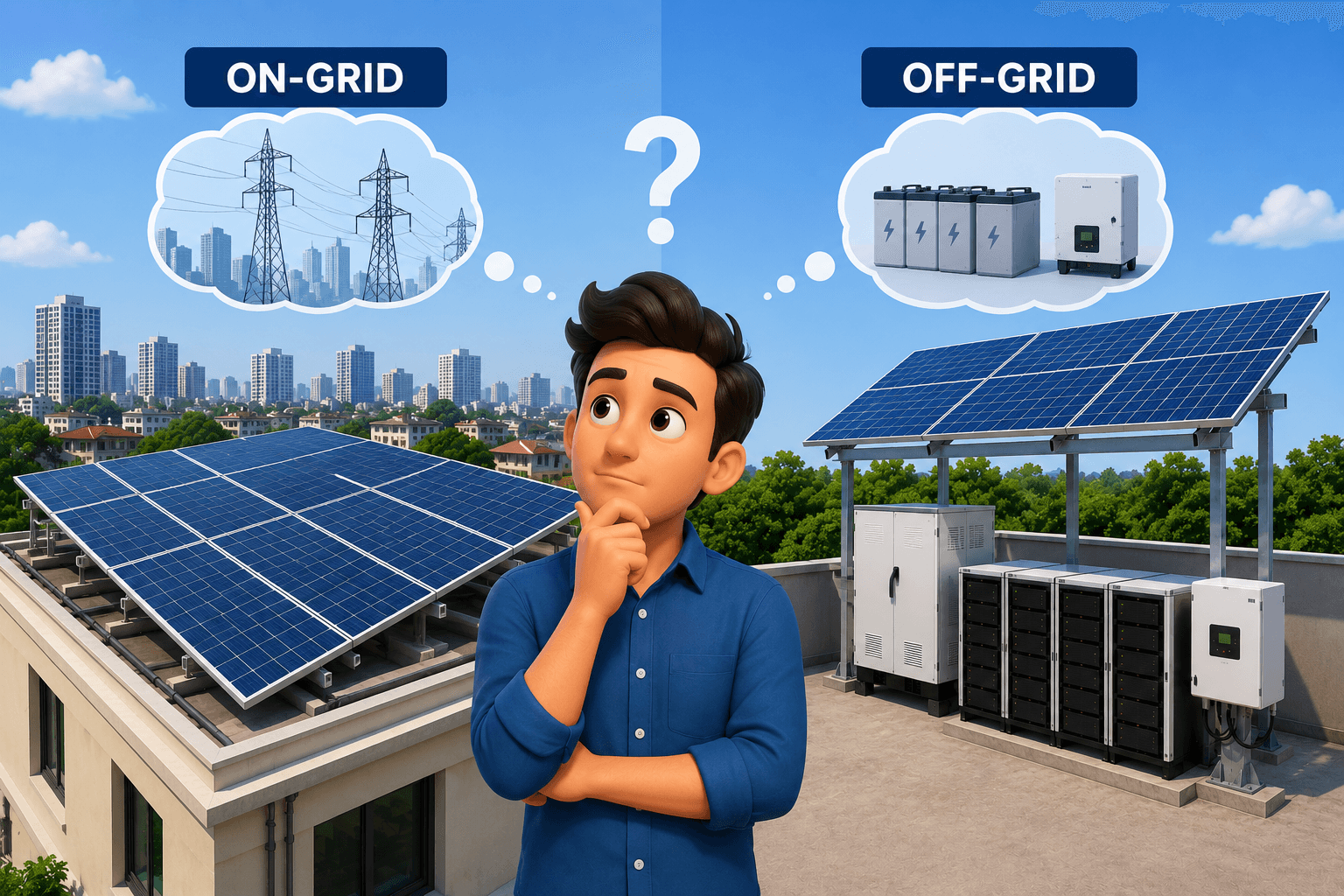
As Bengaluru is increasingly transitioning to clean energy, making rooftop home solar not merely an option but a necessity. When we think about this shift, a few major queries come into our minds. A crucial decision often arises: should you opt for an on-grid or off-grid solar system? Let’s break down the important aspects to help you select the most suitable solar system for your home.
Just the pricing of the systems isn’t enough to make the best choice when it comes to rooftop home solar. It’s important to know how each system functions in practice. Both on-grid and off-grid solar systems capture energy from the sun, but they do it in very different ways when it comes to generating, storing, and distributing this energy. These differences affect your savings, reliability and overall user experience.
Let us simply understand what each system means and practically understand how both the systems function.
On-Grid Solar System
An on-grid solar system connects directly to the electricity grid, supplying power to your home during daylight hours from the solar and allowing you to export any excess energy back to the grid through net metering. During the night the power is pulled from the grid to power your home. These systems are not only cost-effective but also require minimal maintenance, as they do not rely on batteries. However, it's important to note that they do not provide backup power during an outage, as they do not include a battery or a storage unit.
Off-Grid Solar System
Conversely, an off-grid solar system operates independently from the grid and incorporates batteries for energy storage. This ensures a continuous power supply, even during outages. Nonetheless, these systems tend to be more expensive and require ongoing maintenance due to battery usage.
Installation is pretty simple for grid-connected solar systems. The system is directly connected to the utility grid, so no batteries or complex storage mechanisms are necessary. That reduces the upfront investment and cost of long-term maintenance. In fact, off-grid solar systems are more complex to install. They also contain battery banks, charge controllers and backup systems for uninterrupted power supply, apart from solar panels and inverters.
Let us first understand the fundamental cost difference between on-grid and off-grid solar systems, as this is often the deciding factor for most homeowners. Although the basic setup of solar panels, inverters, mounting structures and wiring is the same for both on-grid and off-grid solar systems, the differences in their configuration lead to significant differences in total cost and operating methods. The key contributor to this difference is the use of battery storage in off-grid systems, as well as other equipment needed for energy management and backup. On-Grid Systems
2 - 3 kW: ₹1.5 lakh – ₹2 lakh**
4 - 6 kW: ₹2.5 lakh – ₹3.5 lakh** Off-Grid Systems
2 - 3 kW: ₹90,000 – ₹1.5 lakh**
4 - 6 kW: ₹4 lakh – ₹5.5 lakh**
Both on-grid and off-grid solar systems use the same energy source – the sun – but they work in fundamentally different ways, and this difference is key to understanding which one is truly good for your home. Choosing a home solar system simply because it is cheaper or popular may not always be the best result, it is important to match the functionality of the system with your specific energy needs, lifestyle and location.
An on-grid solar system is synchronised with the grid of electricity and is a great fit for urban homes with a reliable supply of power. This means you can use the electricity you generate during the day and sell the excess power back to the grid. This can lower your overall electricity bill. But it doesn’t turn on during outages because it depends on the grid for backup. This means that its benefits are best realised in areas where power cuts are few and the grid is stable – conditions that are generally true of most parts of Bengaluru.
An off-grid solar system, on the other hand, is meant to be completely independent. It creates and stores its own battery power so you know your home has electricity even if the power goes out or you’re in an area without access to the grid. This is very useful for remote locations, farmhouses or areas where there are frequent and long power cuts. But to achieve such a level of independence, the system has to be scaled and maintained carefully, which increases the complexity and cost.
What is best for Bengaluru?
For most homes in Bengaluru, on-grid systems present a superior choice due to their lower costs, quicker return on investment, and minimal maintenance requirements. Off-grid systems may be more suitable for areas with frequent power outages or those without grid access.
When Does Off-Grid Make Sense?
Off-grid systems excel in specific situations, such as:
- Remote areas lacking grid access
- Locations experiencing prolonged power cuts (8+ hours daily)
- Properties like farmhouses or construction sites
If uninterrupted power is crucial and grid reliability is lacking, off-grid systems provide complete independence, albeit at a higher cost. This will save you from power outages, interruptions, etc.
Along with the two completely different systems, there is a middle ground for you to have a combination of both systems, and it is Hybrid solar.
What About Hybrid Solar?
While this discussion primarily focuses on on-grid and off-grid systems, it’s important to note that hybrid systems merge the advantages of both—grid connectivity with battery backup. These systems are becoming increasingly popular in Bengaluru, where occasional power cuts are common. However, they also come with higher costs, falling between on-grid and off-grid pricing.
Final factors that must be considered before choosing. Before making your informed choice, reflect on the following:
- Reliability of electricity in your area
- Monthly energy consumption
- Budget and return on investment expectations
- Need for backup power
- Available rooftop space
At Atria Renewables, we emphasise that solar energy is not just about installation; it’s about selecting a system tailored to your specific needs. Our site assessors help you decide which system would suit your home the best and guide you to make a confident decision. This ensures anticipated ROI, best efficiency in the systems and many more benefits.
Ultimately, the choice between on-grid and off-grid solar systems hinges on your location and energy requirements. For the majority of homeowners in Bengaluru, on-grid solar systems strike the best balance of affordability, efficiency, and long-term savings. Off-grid systems, while powerful, are best reserved for unique situations where grid independence is critical.
As solar adoption continues to flourish in Bengaluru, making an informed decision today can pave the way for decades of savings and sustainability. Selecting the right home solar system, installed by a reliable partner, ensures you maximize both your financial returns and environmental impact.
Keep Reading
Related articles.
 Solar
SolarThe Invisible Crack: What Every Solar EPC Company in India Should (But Doesn't) Tell You About Overtorquing
Generation loss — micro-cracks from over torqued clamps trigger localised hot spots that produce a permanent 8–15% drop in annual energy yield over 2–3 years.
 Solar
SolarHow to Choose from the Top 10 Solar Companies in Bangalore
Very few of Bangalore’s solar installers clear all six trust checks covered in this guide.
 Solar
SolarSolar on Rooftop: A Bengaluru Homeowner's Overview
A real Bengaluru homeowner's roof-to-switch-on story, not a generic checklist

Still have a question we didn't answer?
Book a free site assessment — our engineers answer in person, on your roof.
Request a Call